Research involving an MCU College of Dentistry faculty member examines whether used ceramic orthodontic brackets can regain their original bonding strength—and whether an additional chemical treatment makes a meaningful difference.
When a ceramic bracket comes loose during orthodontic treatment, replacing it with a new one may seem like the obvious solution. But could the same bracket be treated and successfully bonded again?
A study involving Dr. Shirchie Iris P. Galvan of the Manila Central University College of Dentistry, conducted in collaboration with researchers from IBB University in Yemen, put that question to the test.
The researchers compared new ceramic orthodontic brackets with previously bonded brackets that had undergone different surface treatments before being rebonded.
Their findings were clear: new brackets had substantially higher bond strength than either group of rebonded brackets. Adding hydrofluoric acid (HF) conditioning modestly improved the strength of rebonded brackets compared with mechanical treatment alone, but it did not restore them to the strength of new brackets.
Published in BMC Oral Health, the study provides laboratory evidence that could help guide further research into safer and more effective ways of reusing ceramic orthodontic brackets.
Putting rebounded brackets to the test
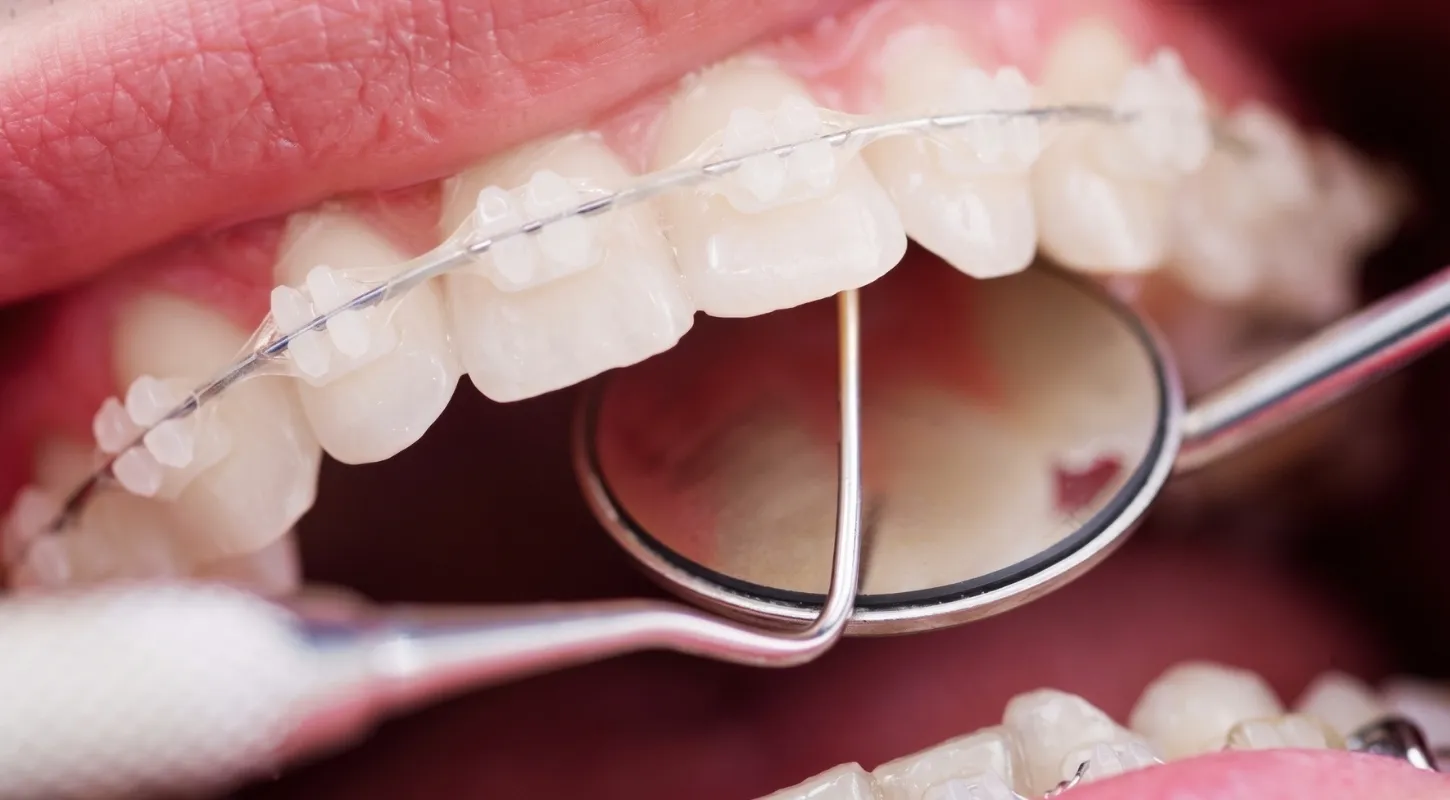
Ceramic brackets are commonly used in orthodontics because their translucent or tooth-colored appearance makes them less noticeable than conventional metal brackets.
But brackets can sometimes become detached during treatment. In certain situations, particularly when immediate replacement is not feasible or cost is a consideration, orthodontists may consider reconditioning and rebonding the detached bracket. The challenge is ensuring that it can still form an adequate bond with the tooth.
The researchers wanted to know whether a rebonded ceramic bracket could achieve bonding strength comparable with a new bracket—and whether treating its surface with hydrofluoric acid could improve that strength.
They tested 30 extracted human premolar teeth and 30 monocrystalline ceramic brackets, divided into three groups.
One group used new brackets. A second used rebonded brackets treated through mechanical abrasion followed by hydrofluoric acid conditioning. The third used rebonded brackets treated with mechanical abrasion without HF conditioning.
Researchers then used a laboratory testing machine to measure how much force was required to detach each bracket.
New brackets still came out on top
The new ceramic brackets recorded the highest average shear bond strength at 13.51 megapascals (MPa).
The difference was substantial.
Rebonded brackets treated with HF had an average bond strength of 6.88 MPa, while rebonded brackets without HF treatment averaged 6.36 MPa. The researchers found statistically significant differences among the groups.
This means that while HF treatment produced a measurable improvement compared with mechanical treatment alone, neither rebonding approach restored the brackets to the bond strength achieved by new ones.
“Our findings provide important baseline evidence for understanding how surface-conditioning methods affect the rebonding of ceramic orthodontic brackets, while highlighting the need for safer and clinically validated approaches,” Galvan said.
A closer look at the bracket surface
The researchers also conducted a pilot examination using scanning electron microscopy (SEM), which allowed them to examine changes to the surface of the brackets at high magnification.
The HF-treated brackets showed roughened surfaces with small pits, while brackets treated with airborne particle abrasion alone appeared smoother and retained some adhesive material.
These differences help researchers understand what may be happening at the microscopic level when different treatments are used to prepare a ceramic bracket for rebonding.
But stronger does not automatically mean better for clinical use.
Hydrofluoric acid is corrosive and toxic and presents handling risks. The researchers therefore emphasized the need to investigate safer approaches to improving the bond strength of reused brackets.
Why could this matter for orthodontic care?
A reliable way to recondition ceramic brackets could have practical benefits.
Reusing a bracket when appropriate could potentially reduce material waste and costs while avoiding the need for immediate replacement.
But those potential benefits depend on whether a reconditioned bracket can perform reliably and safely.
This study provides baseline laboratory evidence, rather than proof that rebonded brackets should routinely replace new ones in clinical practice.
Because the experiment was conducted under controlled laboratory conditions, the brackets were not exposed to everything they would encounter inside a patient’s mouth over time, including temperature changes and long-term moisture. The researchers caution that clinical and in vivo studies are still needed before the findings can be translated into routine orthodontic treatment.
Finding a safer way forward
The findings leave researchers with another important question: Can ceramic brackets be reconditioned more effectively without relying on potentially hazardous chemicals?
Future studies could examine alternatives such as plasma treatment, laser conditioning, and silane-only applications. Researchers also recommend testing rebonded brackets under artificial aging conditions and eventually in clinical settings to determine whether laboratory results hold up during actual orthodontic treatment.
Other studies could compare different adhesives and bracket materials and examine what happens to the adhesive and tooth enamel after brackets detach.
For now, the study provides a useful starting point: ceramic brackets can regain some bonding ability after reconditioning, but the tested methods did not make them perform like new ones. Finding a safer and more effective way to close that gap remains a question for future research.
The study, “Comparison of Shear Bond Strength of New and Rebonded Ceramic Brackets with and without Hydrofluoric Acid Conditioning: An In Vitro Study,” was published in BMC Oral Health, Volume 26, Article 470.
Research Information
MCU Researcher: Dr. Shirchie Iris P. Galvan
College: MCU College of Dentistry
Journal: BMC Oral Health
Published: February 7, 2026
Volume: 26
Article: 470
DOI: 10.1186/s12903-026-07797-7
Full Research Article: https://link.springer.com/article/10.1186/s12903-026-07797-7