
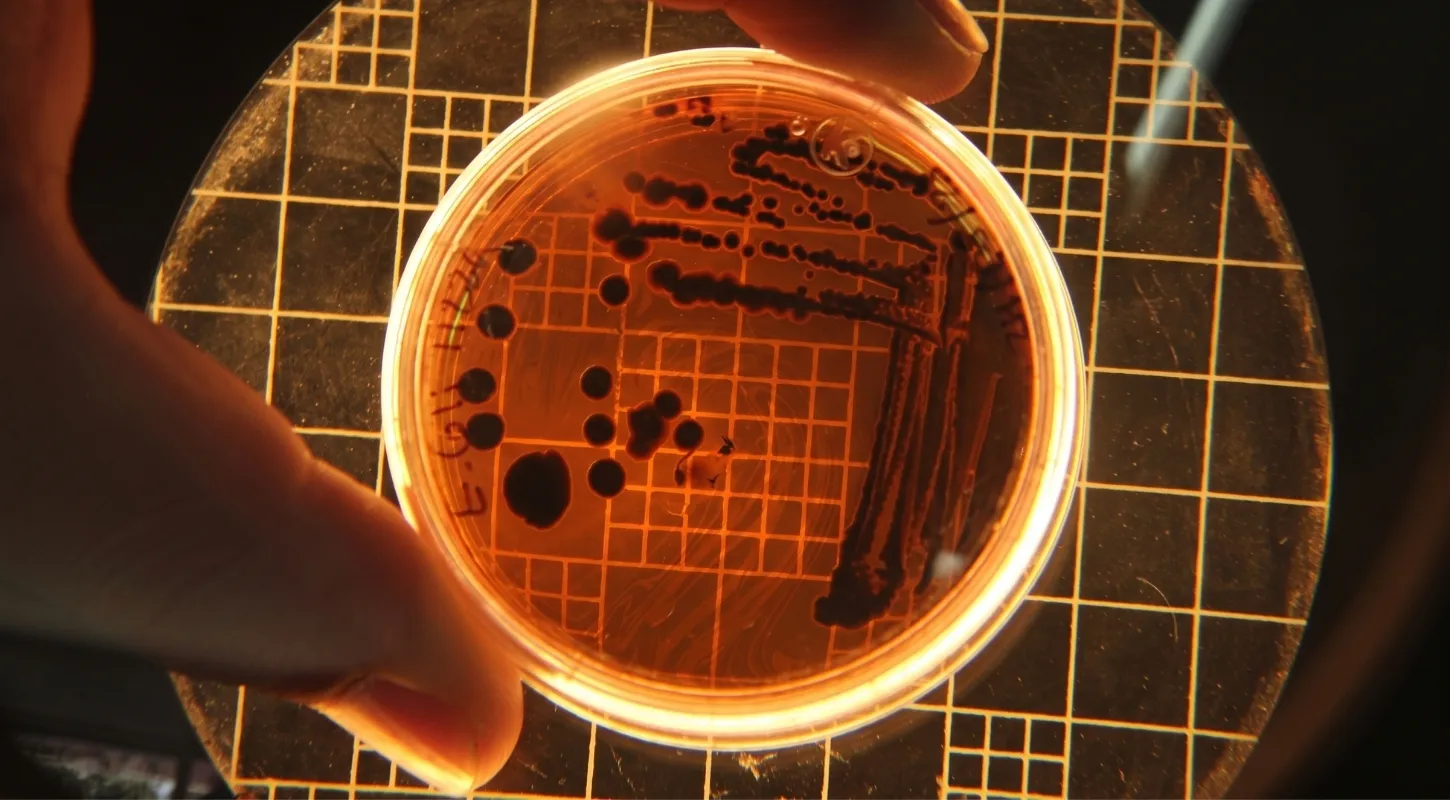
A research review involving an MCU College of Medical Technology faculty member explores how CRISPR technology could help disrupt protective bacterial biofilms and open new possibilities for treating persistent infections.
Some bacteria are difficult to eliminate not only because they resist antibiotics, but also because they can protect themselves within structures known as biofilms.
One of these bacteria is methicillin-resistant Staphylococcus aureus (MRSA), a type of antibiotic-resistant bacterium that can cause infections that are difficult to treat.
A research review involving Dr. Ferdinand A. Mortel of the Manila Central University College of Medical Technology examines how CRISPR, a technology widely known for its ability to target genetic material, could offer new ways to address these persistent bacterial infections.
Published in Frontiers in Cellular and Infection Microbiology, the review brings together existing research on CRISPR-based approaches to disrupting MRSA biofilms, including their potential applications, limitations, and challenges before clinical use.
The findings point to a promising direction in antimicrobial research: instead of relying solely on conventional antibiotics, researchers are exploring ways to target the genetic mechanisms that help bacteria survive and resist treatment.
Why are some bacterial infections so difficult to treat?
MRSA is known for its resistance to several commonly used antibiotics. But antibiotic resistance is only part of the challenge.
These bacteria can also form biofilms—communities of microorganisms surrounded by a protective matrix that helps them attach to surfaces and withstand environmental threats.
Biofilms can develop on tissues and medical devices, making infections more difficult to eliminate and contributing to persistent or recurring infections.
Within these structures, bacteria can become less susceptible to antimicrobial treatments, creating challenges for healthcare professionals.
This raises an important question: What if researchers could interfere with the genes that help these bacteria resist treatment and maintain their protective biofilms?
That is where CRISPR technology comes in.
Using CRISPR to target bacterial defenses
CRISPR is often associated with gene editing, but its potential applications extend beyond modifying human or animal genes.
Certain CRISPR-Cas systems can be designed to recognize specific genetic sequences, allowing researchers to target genes involved in bacterial survival, antibiotic resistance, and biofilm formation.
The review examines three CRISPR systems—Cas9, Cas12a, and Cas13—each offering different capabilities.
Cas9 can be used to target bacterial DNA, including genes associated with antibiotic resistance and virulence, or the ability to cause disease.
Cas12a offers capabilities that may be useful for targeting multiple genetic sequences, while Cas13 works at the RNA level, creating possibilities for suppressing gene activity without directly changing bacterial DNA.
By targeting these mechanisms, researchers hope to weaken bacterial defenses and make biofilm-associated infections easier to address.
However, identifying the right genetic target is only one part of the challenge.
Reaching bacteria inside the biofilm
One of the review’s central findings is that even a precisely designed CRISPR system may be ineffective if it cannot reach the bacteria it is intended to target.
The protective structure of a mature biofilm can make it difficult for antimicrobial agents and gene-targeting technologies to penetrate.
To address this, researchers are investigating different delivery methods.
These include engineered bacteriophages—viruses that infect bacteria—as well as nanoparticles, hydrogels, and localized delivery systems designed to transport CRISPR components to infected areas.
The review highlights early animal studies in which engineered bacteriophages and localized delivery approaches have shown promising reductions in bacterial burden and disruption of biofilm structures.
These findings provide encouraging evidence for further investigation, but they do not yet establish that CRISPR-based treatments are safe or effective for routine use in patients.
Why precision and safety matter
CRISPR’s ability to target specific genetic sequences is one of its greatest advantages.
But precision also introduces important challenges.
Researchers must ensure that the technology reaches the intended bacterial cells, targets the correct genetic sequences, and minimizes unintended effects.
The review identifies several obstacles that still need to be addressed, including inefficient delivery, limited penetration into mature biofilms, unintended genetic effects, the possibility of bacterial resistance to CRISPR-based interventions, and uncertainties surrounding safety and regulation.
“CRISPR-based strategies show promise for addressing persistent MRSA biofilms, but successful clinical translation will require advances in delivery, targeting precision, safety, and validation,” Mortel said.
The review emphasizes that successful treatment development will require more than identifying genes associated with antibiotic resistance.
Researchers must also understand the physical structure of biofilms, how bacteria behave within them, and how potential treatments can be delivered safely and consistently.
What could this mean for future infection treatment?
Antibiotic-resistant infections remain an important concern for healthcare systems worldwide.
Developing new approaches to persistent infections could eventually benefit patients, healthcare professionals, and researchers working in microbiology, infectious diseases, and medical technology.
The review suggests that combining CRISPR with advanced delivery technologies could offer opportunities for developing more targeted antimicrobial approaches.
For example, future systems could potentially use engineered bacteriophages to deliver CRISPR components directly to bacteria or use specialized materials to release them at infected sites.
Such strategies could eventually complement existing antimicrobial treatments.
However, the review does not establish a new treatment for MRSA infections. Its contribution is to synthesize available scientific evidence and identify what must be accomplished before these technologies can move toward clinical application.
What comes next for CRISPR-based antimicrobial research?
The researchers identify several priorities for future investigation.
These include improving the delivery of CRISPR components into mature biofilms, designing systems capable of targeting multiple bacterial genes, and developing more precise approaches that reduce unintended effects.
Further research is also needed to evaluate long-term safety, monitor possible resistance, and determine how these technologies could be manufactured and regulated for medical use.
Rigorous preclinical testing will be necessary before clinical trials can establish whether these approaches are suitable for patients.
For now, the review offers an important perspective on the future of antimicrobial research: fighting antibiotic-resistant bacteria may require not only new medicines, but also new ways of disrupting the biological systems that protect them.
The article, “CRISPR-driven Strategies to Disrupt Methicillin-resistant Staphylococcus aureus Biofilms: A Review,” was published in Frontiers in Cellular and Infection Microbiology. It examines existing scientific evidence on CRISPR-based antimicrobial strategies and the challenges involved in translating these approaches into clinical practice.
Research Information
MCU Researcher: Dr. Ferdinand A. Mortel
College: MCU College of Medical Technology
Journal: Frontiers in Cellular and Infection Microbiology
Publication Date: May 13, 2026
DOI: 10.3389/fcimb.2026.1784529
Full Research Article: Frontiers | CRISPR-driven strategies to disrupt methicillin-resistant Staphylococcus aureus biofilms: a review