
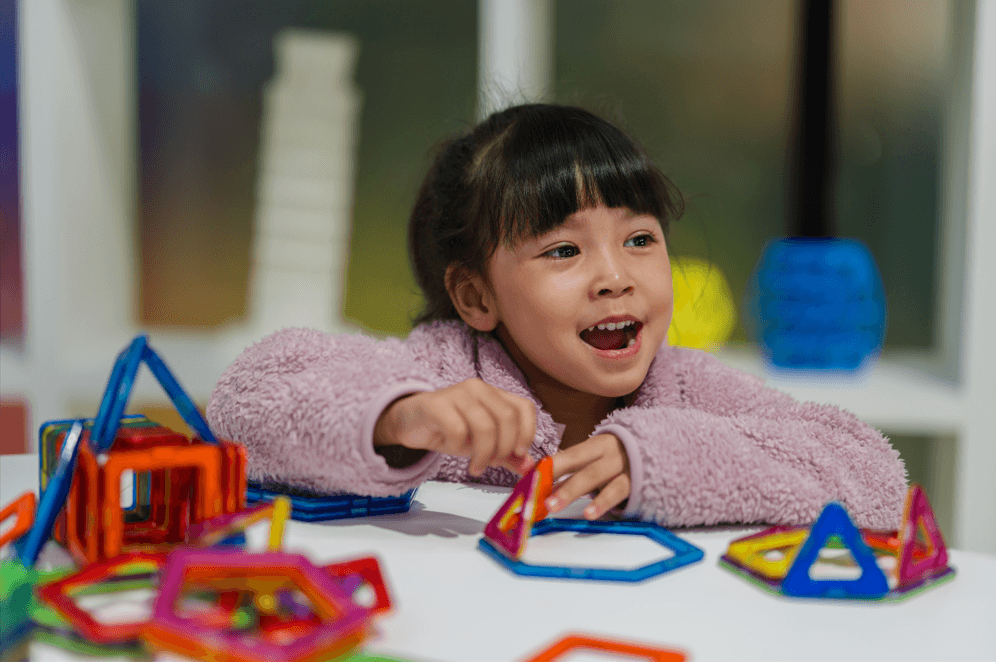
For parents exploring preschool options in Metro Manila, play-based learning offers a way for children to develop early academic skills while enjoying hands-on activities and social interaction. Rather than focusing mainly on worksheets and memorization, this approach encourages learning through play, exploration, and guided experiences.
More than just a fun way to learn, play-based education supports children’s overall development. It nurtures curiosity, builds confidence, and encourages independence while helping children develop cognitive, social, emotional, and physical skills that support their transition to formal schooling.
What Is Play-Based Learning?
Play-based learning helps children develop foundational skills through enjoyable, hands-on experiences. Activities such as building with blocks, storytelling, art, puzzles, and imaginative games encourage them to explore ideas, solve problems, and learn at their own pace.
Teachers support this process by preparing age-appropriate activities, observing progress, and asking questions that guide discovery. This balance of child-led and teacher-guided play gives children room to make choices while receiving support when needed.
How Does It Differ From Traditional Preschool Models?
Rather than relying mainly on worksheets, memorization, and drills, play-based learning introduces early academic concepts through practical activities. For example, children can practice counting by sorting objects, develop language through storytelling, and explore shapes by building structures.
Teachers still introduce literacy, numeracy, and classroom routines, but connect them to meaningful experiences suited to each child’s developmental stage.
Top Reasons Parents in Metro Manila Prefer Play-Based Preschools
Play-based preschools help children build essential skills while making early learning enjoyable and engaging. Through guided activities, group play, and hands-on experiences, children can develop in several areas as they prepare for more structured schooling.
1. Supports Overall Development
Play gives children opportunities to develop cognitive, social, emotional, and physical skills. Building with blocks encourages problem-solving and spatial awareness, pretend play supports creativity and emotional expression, while active games help develop coordination.
2. Builds Social and Communication Skills
Group activities teach children to share, take turns, listen, and express their ideas. Through shared projects and pretend games, they also learn to cooperate, negotiate roles, and work towards common goals. Teachers can guide them in resolving disagreements and communicating respectfully.
3. Encourages Independence and Confidence
Choosing materials, deciding how to complete a task, and taking on roles in games give children opportunities to make age-appropriate decisions. With guidance when needed, they can try things independently, learn from mistakes, and become more confident in their abilities.
4. Makes Learning Enjoyable and Engaging
Stories, music, movement, and hands-on activities introduce new concepts in ways that capture children’s interest. Supportive teachers and familiar routines also help children feel comfortable participating, exploring, and trying unfamiliar activities.
5. Builds Readiness for Formal Schooling
Play-based activities introduce skills children will use in kindergarten and beyond. Following directions, paying attention, completing tasks, and participating in group activities help children become familiar with classroom expectations. Age-appropriate literacy and numeracy activities further support this transition.
Benefits of Play-Based Learning for Children
Play-based learning supports children’s early development by giving them opportunities to practice important skills, explore new ideas, and learn through experience. Two key benefits are:
Supports Brain Development in the Early Years
Play helps children practice foundational skills such as attention, memory, self-control, and problem-solving. For example, following game rules encourages them to remember instructions, wait their turn, and manage impulses. Repeated practice through age-appropriate activities helps strengthen these abilities over time.
Encourages Curiosity and Exploration
Hands-on activities encourage children to ask questions, test ideas, and discover how things work. Building with different materials or taking part in nature-themed activities can help them make predictions, observe results, and find solutions.
Teachers can deepen this learning by asking open-ended questions, such as “What do you think will happen next?” or “How could we make this work differently?” This encourages children to explain their ideas and consider different possibilities.
Common Misconceptions About Play-Based Learning
Parents considering a play-based preschool may have questions about its structure, academic value, and ability to prepare children for kindergarten. Let’s explore some common misconceptions and what parents should know about this approach.
Misconception #1: Play-Based Learning Lacks Structure
Play-based learning still follows clear learning goals, routines, and teacher guidance. Educators plan age-appropriate activities, introduce new concepts, and observe children’s progress.
A balanced curriculum combines child-led exploration with guided lessons. For example, storytelling and letter games introduce literacy, while counting objects and sorting shapes develop early numeracy.
Misconception #2: Children May Fall Behind Academically
Children can develop foundational reading, writing, and math skills through purposeful play. Games, storytelling, and hands-on activities provide opportunities to practice these skills without relying solely on worksheets and drills.
Parents can ask how a preschool teaches literacy and numeracy, monitors progress, and provides additional support when needed.
Misconception #3: Play Is Not a Serious Form of Learning
Play can support meaningful learning when activities have clear goals and teacher guidance. Pretend play develops language, puzzles encourage problem-solving, and group games help children practice cooperation and self-regulation.
Misconception #4: Play-Based Learning Does Not Prepare Children for Kindergarten
A well-planned play-based program helps children develop skills they need for more structured classrooms. Group activities and daily routines teach them to follow instructions, take turns, complete tasks, and manage transitions.
Parents can reinforce these habits through shared reading, simple routines, and age-appropriate responsibilities at home.
Choosing a Play-Based Preschool in Metro Manila
Choosing the right preschool means finding a learning environment where your child feels supported, engaged, and ready to grow. A play-based approach can nurture cognitive, social, emotional, and physical development while introducing foundational academic skills through exploration and guided activities.
As you compare preschools, consider these key factors:
- Curriculum: Check how the program balances child-led play, guided activities, and early literacy and numeracy.
- Teacher Qualifications: Look for educators with relevant early childhood training and experience supporting young learners.
- Learning Environment: Consider whether the classrooms and facilities are safe, welcoming, and suited to children’s needs.
- Parent Communication: Ask how teachers share updates, assess progress, and help families support learning at home.
It is also helpful to discuss your child’s needs and your expectations with the school before making a decision. You can explore Manila Central University’s Preschool program to learn more about our early childhood education approach and learning environment.